
The Royal Taste of Awadh
A 120-Year-Old Culinary Legacy Unfolds...
The culinary landscape of India is incredibly diverse, yet few cities capture the essence of historic gastronomy quite like Lucknow. Known globally as the city of Nawabs, Urdu poetry, and exquisite architectural wonders, Lucknow holds a distinctive crown for its classical Awadhi cuisine. At the absolute apex of this food subculture stands a single name that has achieved legendary status among international gourmands: Tunday Kababi. For well over a century, this historic establishment has preserved an unparalleled kabab tradition, serving delicate culinary masterpieces that truly reflect the royal heritage of old Awadh.
The Royal Origins: A Nawab's Culinary Quest
The story of Tunday Kababi reads like a historical romance, deeply intertwined with the shifting political and cultural dynamics of 17th and 18th-century India. The lineage of the modern melt-in-the-mouth Awadhi kabab traces back to Haji Murad Ali, a masterful royal chef working under the patronage of the Nawabs. According to historical lore, one of the later Nawabs of Awadh—reputed to be Nawab Asaf-ud-Daula or his contemporaries—had begun losing his teeth due to old age. However, his profound passion for gourmet meats remained entirely undiminished. Distressed by his inability to chew the traditional, tough skewered kababs of the era, the Nawab issued a royal decree to chefs across the land: create a kabab so wonderfully tender that it required absolutely no chewing to enjoy.
Haji Murad Ali took up this royal challenge. He meticulously experimented with cutting techniques, fat ratios, and natural meat tenderizers to create a completely unique paste. The resulting creation was the legendary Galouti Kabab (literally meaning 'the kabab that melts'). The Nawab was so thoroughly enchanted by this smooth texture and explosion of complex aromatic flavors that he lavishly rewarded the chef, cementing the dish as a fundamental cornerstone of royal court banquets.
How "Tunday" Got Its Unique Name
Many modern travelers often wonder about the unusual etymology behind the name 'Tunday'. The word itself is a colloquial Hindi-Urdu slang term used to describe a person living with a physical hand impairment. Haji Murad Ali, who had perfected the secret blend of spices for the royal court, unfortunately fell from a high roof during his youth, resulting in the amputation of his left arm.
Undeterred by this physical setback, he continued to cook exclusively with his one remaining hand. When his family opened their very first public shop in the bustling, narrow alleys of the historic Chowk area of Old Lucknow in the year 1905, locals affectionately began referring to the stall as "Tunday Kababi" (The One-Armed Cook's Shop). What began as a descriptive nickname quickly evolved into a powerful badge of unmatched culinary excellence, recognized across the globe.
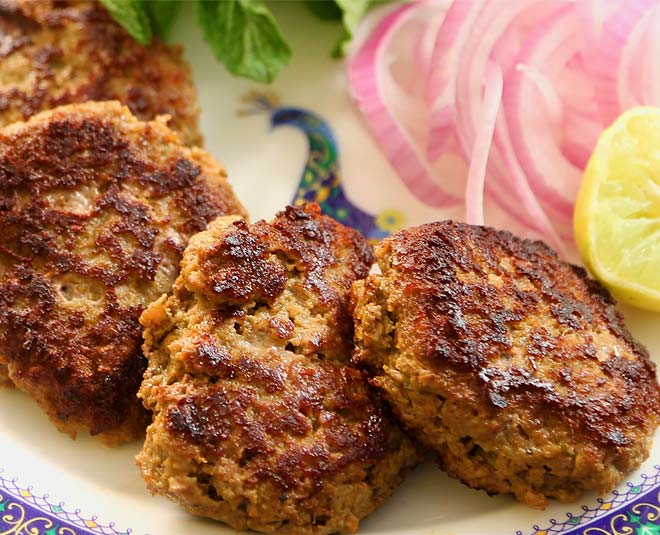
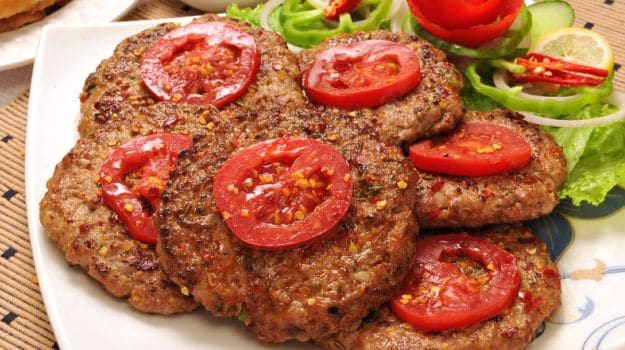
Visual Journey Through Awadhi Flavors


The Secret Science of the 160-Spice Masala
The defining feature of a genuine Tunday kabab is its incredible texture, which smoothly gives way the very moment it touches your palate. This is achieved through a meticulous, highly guarded preparation process that has remained largely unchanged since 1905. The family utilizes a highly classified mix of exactly 160 secret spices. This complex masala mix includes rare ingredients such as dried sandalwood powder, pathar ke phool (stone flower), khus (vetiver root), and various aromatic botanical extracts.
The minced meat is thoroughly ground multiple times until it achieves an incredibly smooth paste-like consistency. It is then mixed with finely measured quantities of raw papaya paste, which breaks down the meat fibers down to a molecular level over several hours. Finally, the mixture undergoes a traditional smoking process using heated charcoal and aromatic clarified butter (ghee) in a sealed vessel, a technique known historically as Dhungar. When cooked on the flat, heavy iron griddles (tawas), the outside forms a thin, caramelized crust while the inside remains fully liquefied.
Chowk vs. Aminabad: The Dining Experience
For food enthusiasts planning a modern culinary pilgrimage to Lucknow, navigating the locations is key. The original heritage outlet remains deep within the bustling labyrinth of the Chowk market. This location serves the historic buffalo-meat variants cooked over ancient wood-fired pits. The environment here is intensely old-school, raw, and minimalist—focusing strictly on fast execution and deep, ancestral flavor profiles.
For those seeking a broader menu that includes the celebrated goat-meat (mutton) and chicken variations, the larger Aminabad branch is the primary destination. Stepping into the Aminabad outlet introduces diners to an energetic atmosphere where hundreds of plates are ferried out every hour alongside hot, flaky Ulta Tawa Parathas (a slightly sweet, saffron-infused layered flatbread cooked on an inverted griddle). The combination of the warm, rich paratha wrapping around a melting kabab creates a perfect harmony of sweet, savory, smoky, and spicy profiles.
Preserving Cultural Identity in Modern India
In an era dominated by globalized fast-food franchises and hyper-processed ingredients, the continuous success of Tunday Kababi represents a brilliant preservation of living culinary art. It acts as a bridge connecting modern generation foodies directly to the courts of the Nawabs. The current generation of the family continues to mix the core spice formulas by hand behind closed doors, ensuring the brand's unique identity remains fully uncompromised by commercial mass production.
To experience Tunday Kababi in its home city is to experience the true heartbeat of Lucknow. It is a sensory immersion into a time when dining was treated as a slow, deliberate art form. For any serious traveler or culinary enthusiast, a trip to this historic landmark is more than just a meal—it is a direct encounter with an enduring century-old legacy of royal Indian craftsmanship.



0 Comments